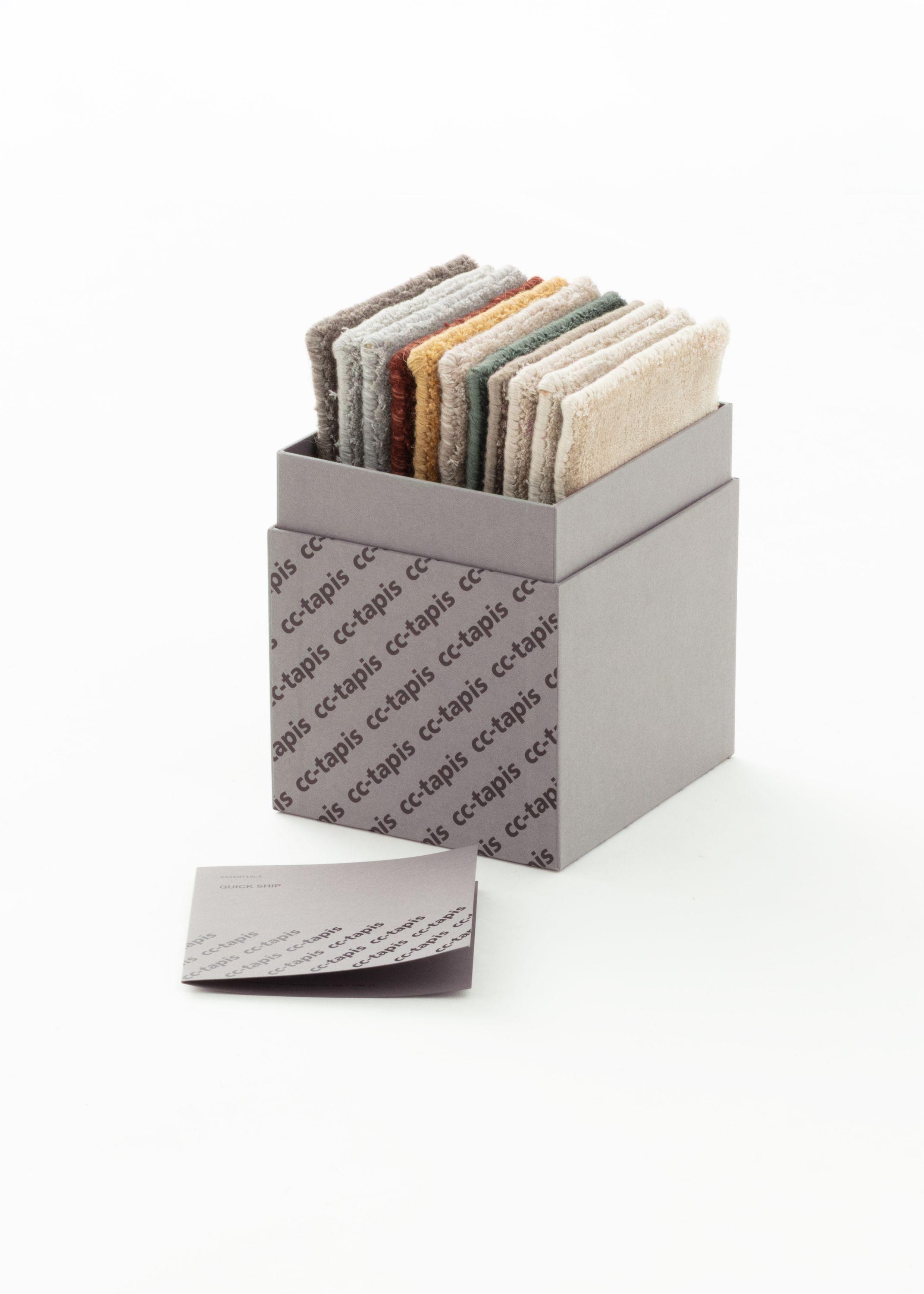
Sustainability
tradition through innovation
cc-tapis is guided by a sustainable approach that doesn’t stop at production
cc-tapis’ commitment to sustainability extends beyond producing timeless hand-made rugs with a selection of organic and natural materials. For years the company has undertaken a path for transversal reduction through its production and distribution processes, paying attention to social, human and economic factors.


In 2020 and 2021 cc-tapis minimized its impact by saving, recycling and reusing materials to encourage more sustainable practices. In 2021 the company launched plastic-free packaging, taking advantage of the tons of clothing which are discarded globally every year. cc-tapis developed a resistant plastic-free textile which became the brand’s packaging, shipping rugs worldwide.

Working closely with GR10K, a Milanese company known for its creative approach to sustainability, the 100% plastic free fabric was transformed into a recycled and recyclable shopping bag, going beyond packaging. A project which outlined that a product’s lifespan doesn’t end at delivery.
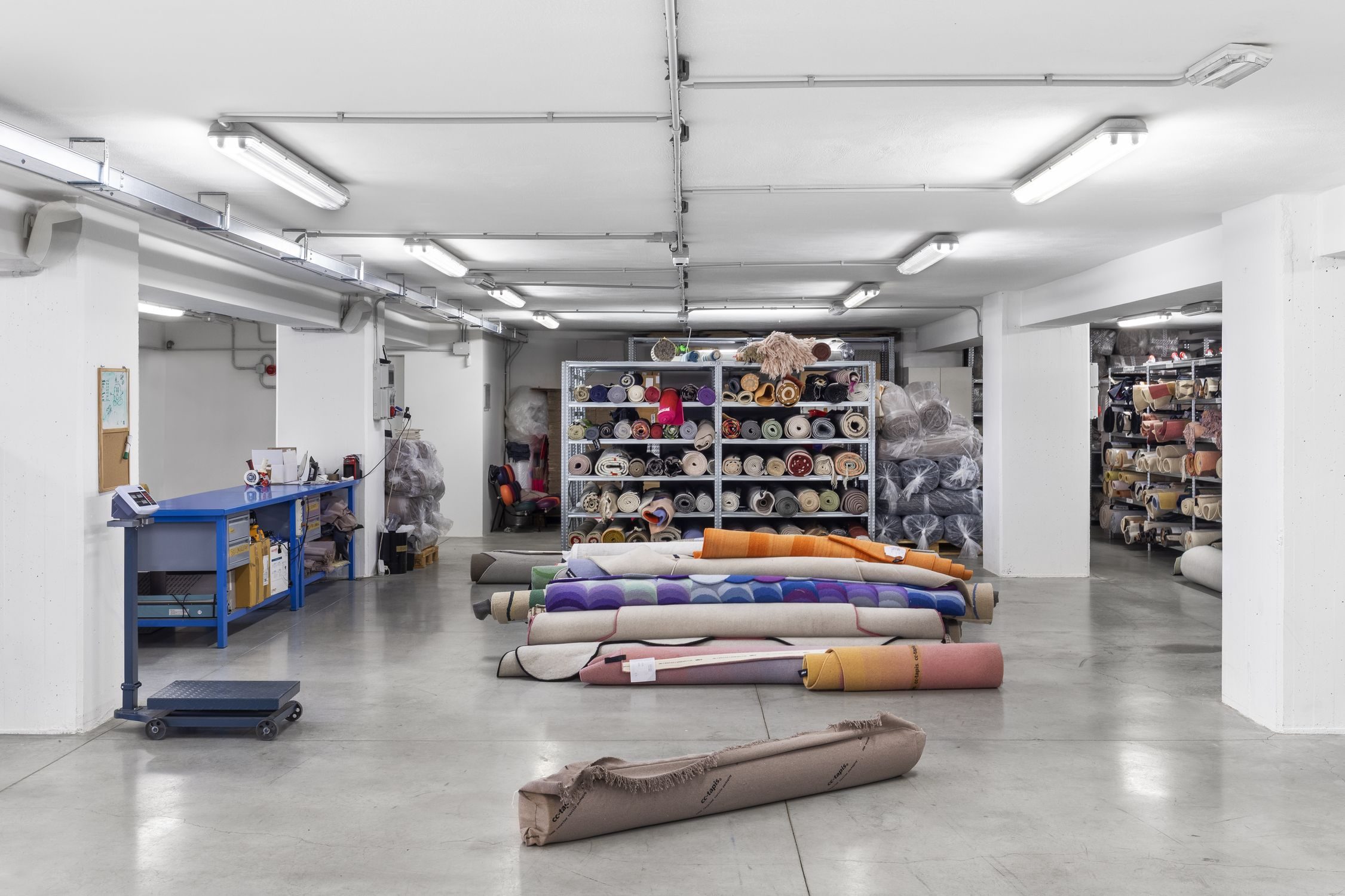
As a design brand and producer, cc-tapis recognizes its responsibility to minimize its environmental impact, understanding that what we produce today will shape tomorrow without compromising the needs of future generations.
Guided by the ambition to make its business as sustainable as the production of its handmade rugs, cc-tapis continuously invests in initiatives that reduce its environmental footprint. From selecting natural materials and avoiding polluting components to upcycling discarded clothing into 100% plastic-free packaging, sustainability is embedded throughout the company's operations.
Since 2022, cc-tapis has partnered with Carbonsink, an Italian consultancy specializing in climate strategies and carbon neutrality, to measure and offset the greenhouse gas emissions generated by the transportation of its rugs worldwide. Every year, Carbonsink calculates the emissions produced by the company's shipments by road, sea, and air, enabling cc-tapis to invest in certified carbon offset projects that compensate for its transportation-related emissions.
Rather than supporting a single initiative, cc-tapis has chosen to diversify its impact by contributing to projects that protect forests, preserve biodiversity, promote renewable energy, and improve the quality of life of local communities around the world.
Over the years, cc-tapis has supported the following certified carbon projects:
2022
- Maputo Cookstove Project, Mozambique
2023
- Maputo Cookstove Project, Mozambique
- REDD+ Alto Huayabamba Conservation Concession, Peru
2024
- REDD Ntakata Mountains Project, Tanzania
- Ventus Wind Farm, El Salvador
2025
- Ventus Wind Farm, El Salvador
Each project has been carefully selected to generate verified carbon credits while delivering additional environmental and social benefits, including forest conservation, biodiversity protection, access to clean cooking technologies, renewable energy generation, and support for local communities.
These annual investments are part of cc-tapis' broader sustainability strategy and its ongoing commitment to achieving full carbon neutrality by 2030.


In 2024 cc-tapis set a new standard for creativity introducing regenerated Econyl® Nylon yarns in its material universe.
An extremely durable fiber which is constructed from completely regenerated nylon. Produced by Aquafil, recognized as pioneers in circular economy, ECONYL® yarn begins its life cycle as waste such as discarded fishing nets, fabric scraps and old carpets destined for landfills. Aquafil rescues these materials and transforms them back into virgin nylon yarn through a depolymerization process. A process which can be repeated infinitely.
Marking a significant stride towards consciousness, cc-tapis applies the robotufting technique with the innovative Econyl® yarn producing custom rugs for exhibitions, installations, museums and fashion shows in the company’s new Milanese prototyping center.
Encouraging a new interpretation and usage of materials, each piece produced using Econyl® can be regenerated, being part of Aquafil’s R2R program. This means that at the end of its use, the rug can be fully recycled with its fibers being regenerated into a brand-new Nylon yarn, ensuring a sustainable loop in the production process.

When transporting rugs internationally, each piece need to be packed safely, according to specific requirements which vary from country to country. cc-tapis chooses environmentally friendly packaging solutions to ensure rugs are safest after leaving the Milanese Headquarters.
Guided by a sustainable approach, in 2024 cc-tapis introduced customized tubular plastic foils for rug-packaging made with 100% regenerated plastic, which can be reused for many years and 100% recycled again. A high-strength material produced by PG PLAST which protects rugs from atmospheric and thermal agents during transportation encouraging new interpretation of materials. In addition to savings, the use of recycled plastic allows to reduce the impact on the environment, supporting/boosting the circular economy.