ESCUELA DEL BALLET FOLKLÓRICO DE MÉXICO
cc-tapis presents Whispers by Scarlett Rouge and Stroke by Sabine Marcelis
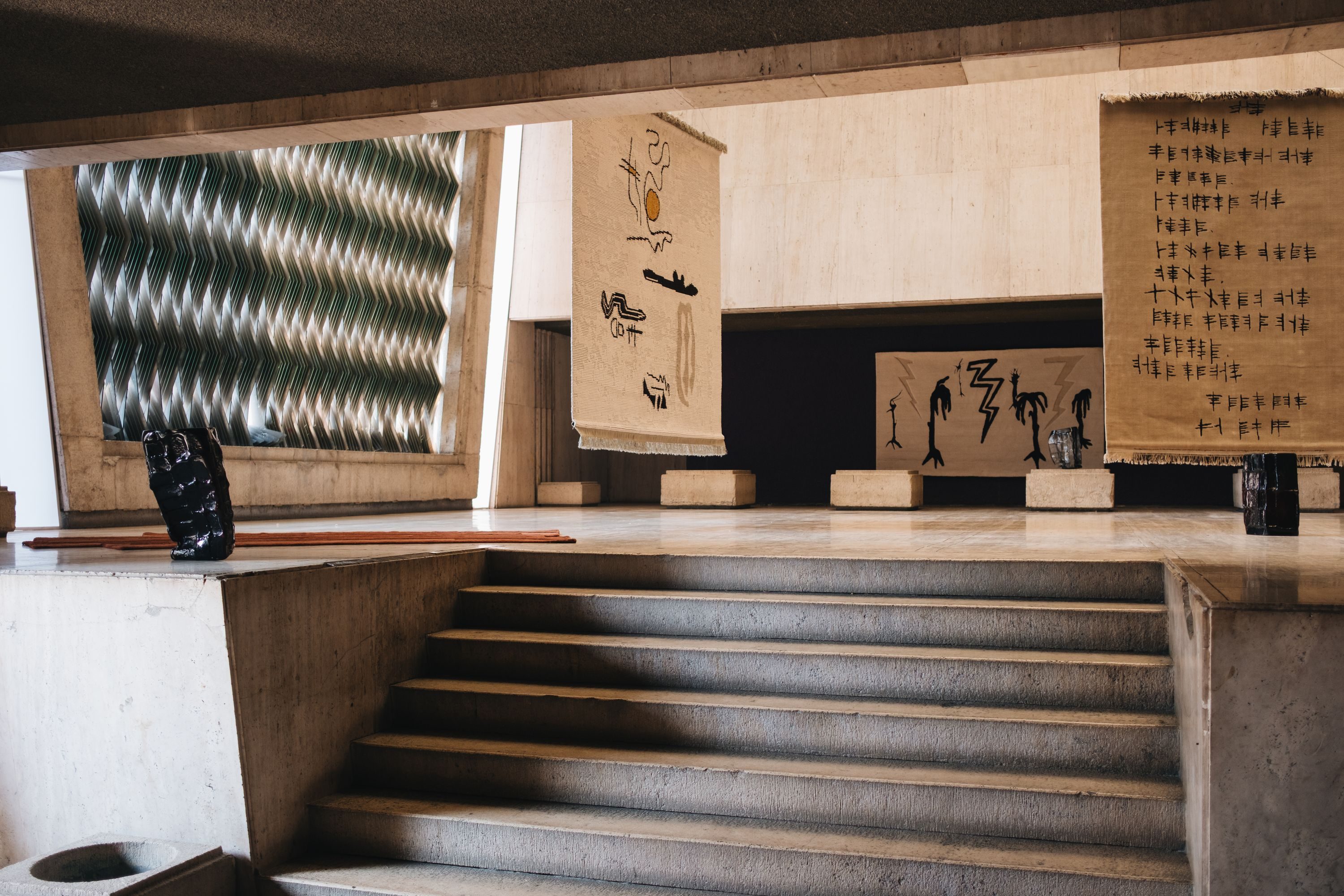
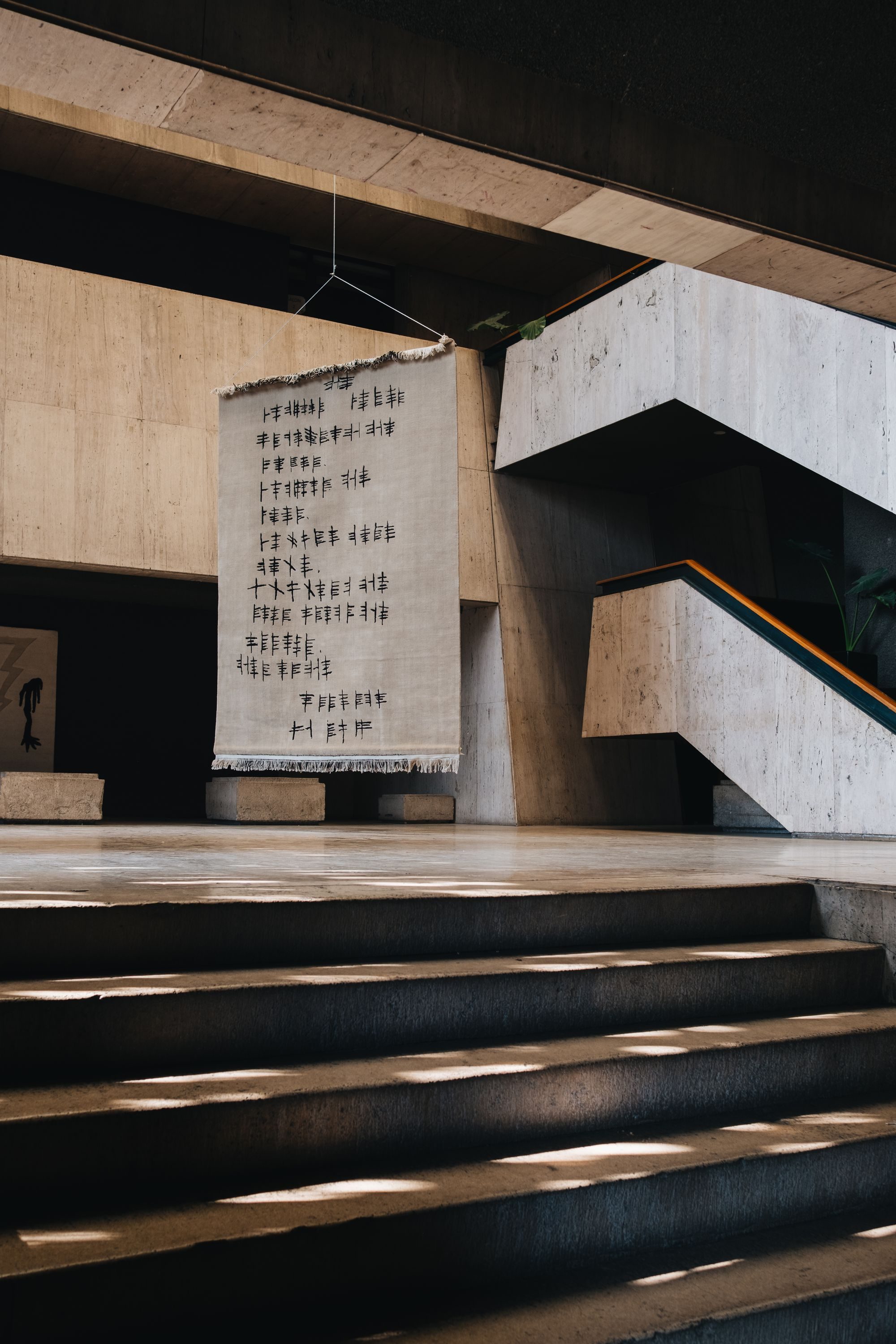
For Mexico City Art Week 2026, cc-tapis takes part in Inner Stage, a site-specific exhibition presented by Studio 84, returning to Mexico City as part of a broader project that brings together contemporary design and performing arts. The exhibition takes place at the Escuela del Ballet Folklórico de México de Amalia Hernández, the iconic cultural institution designed by Agustín Hernández Navarro and dedicated to the preservation of folkloric dance.
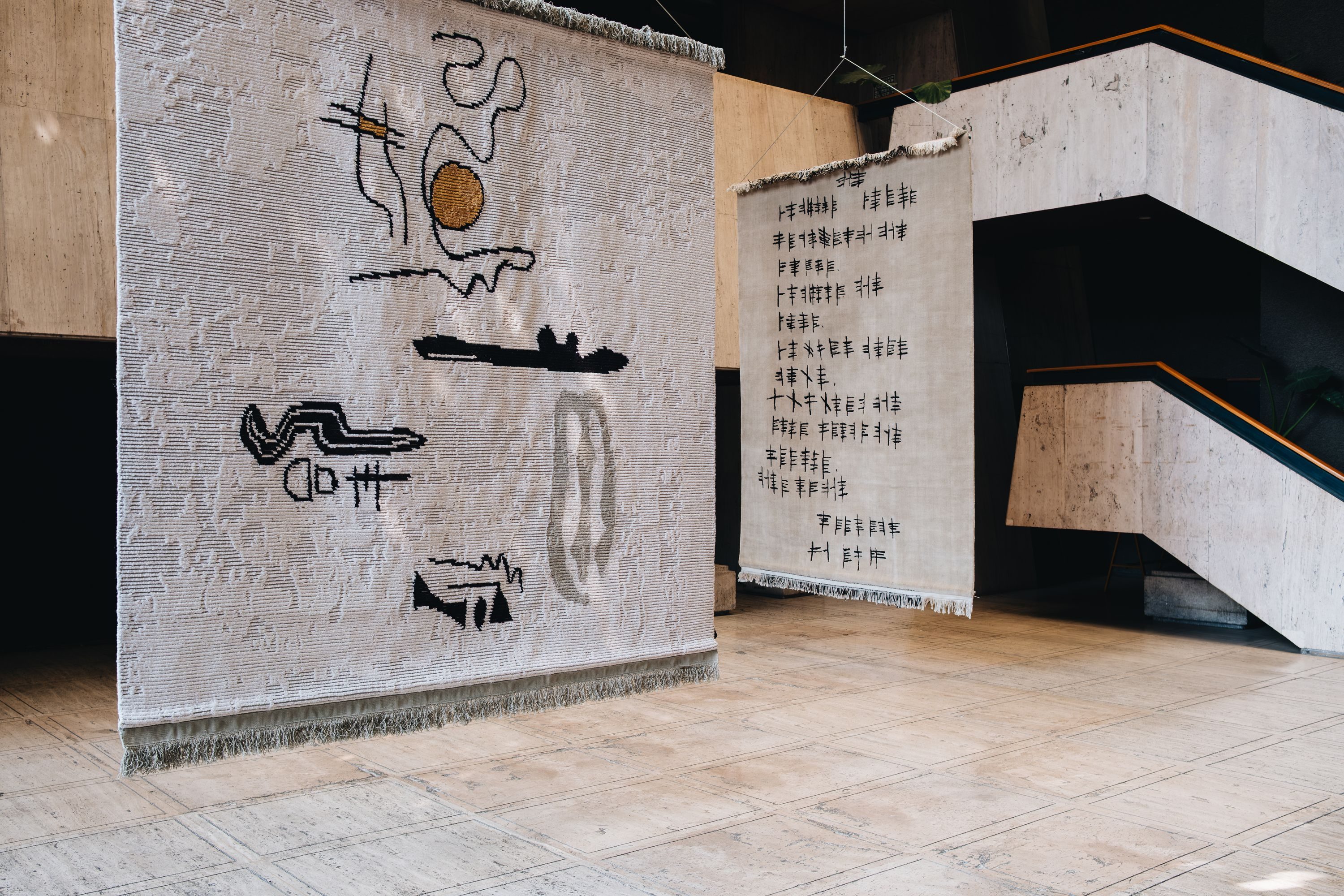
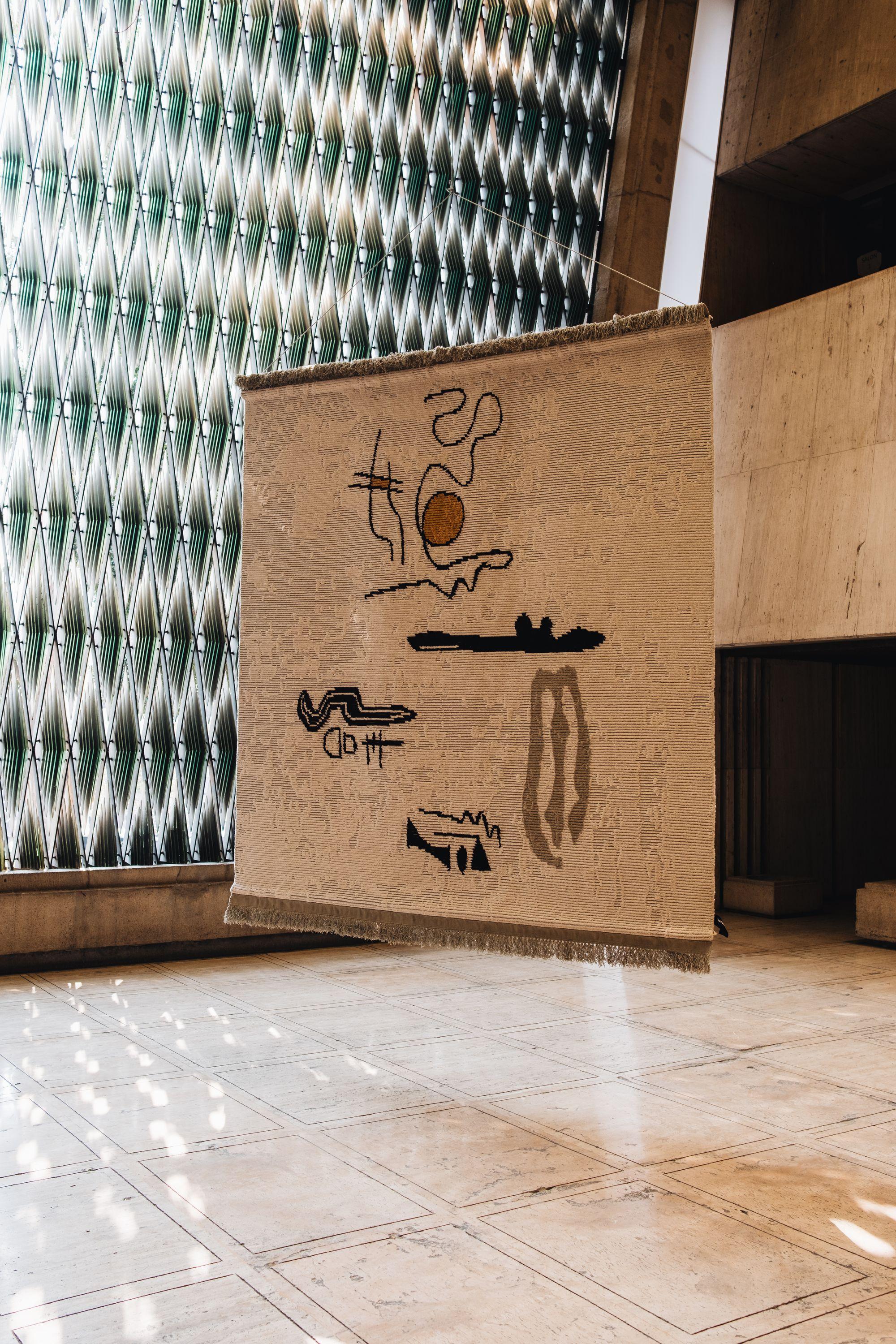
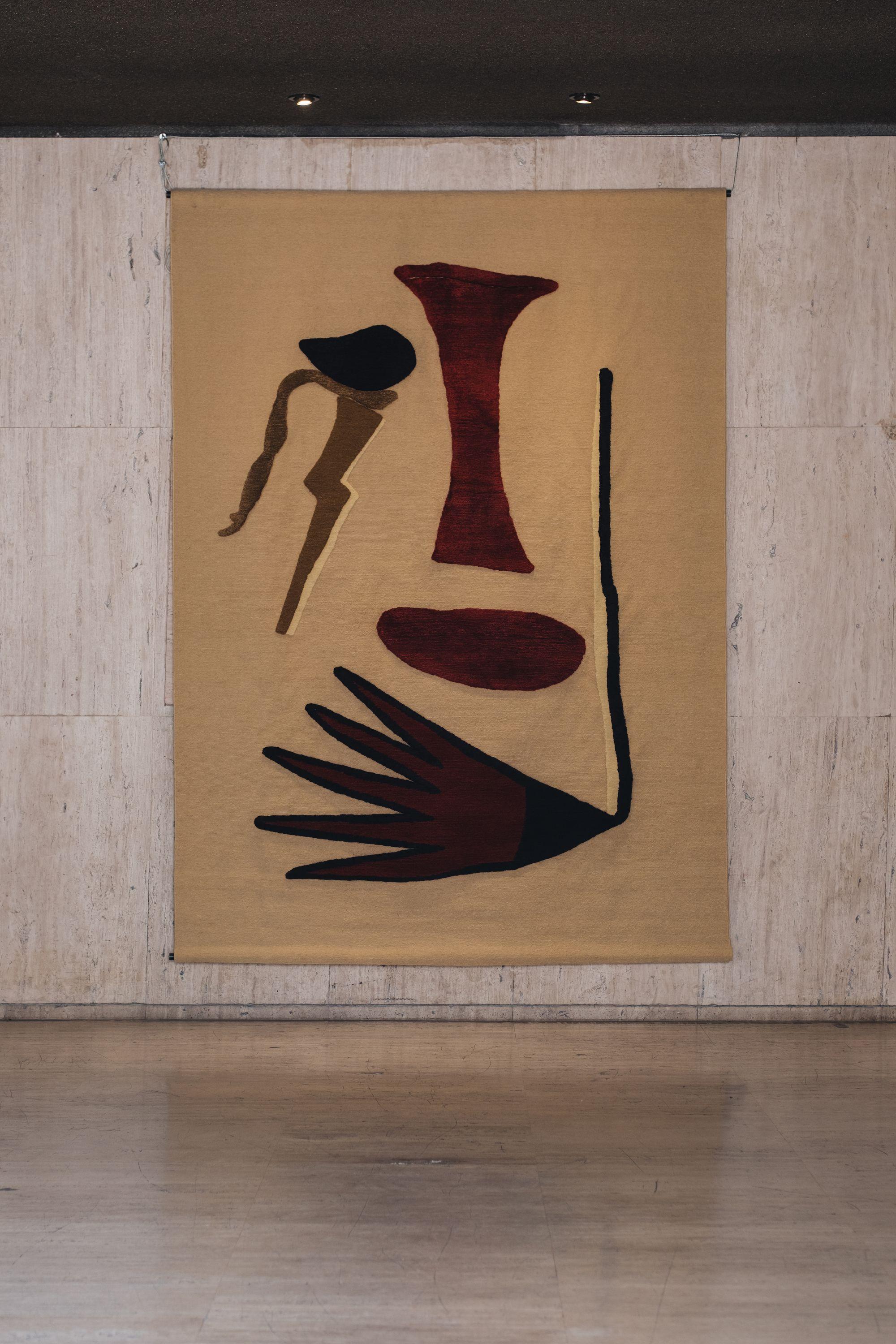
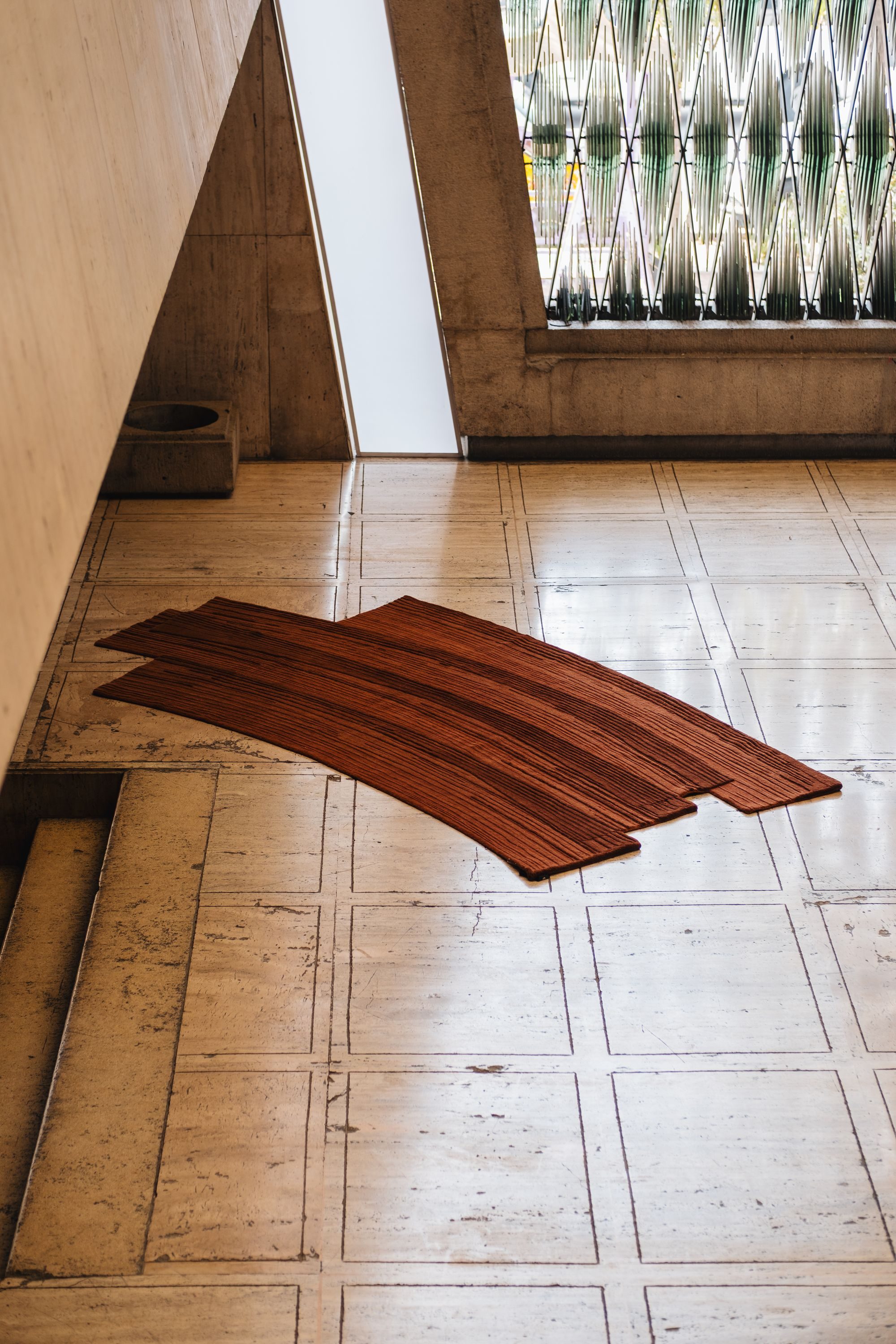
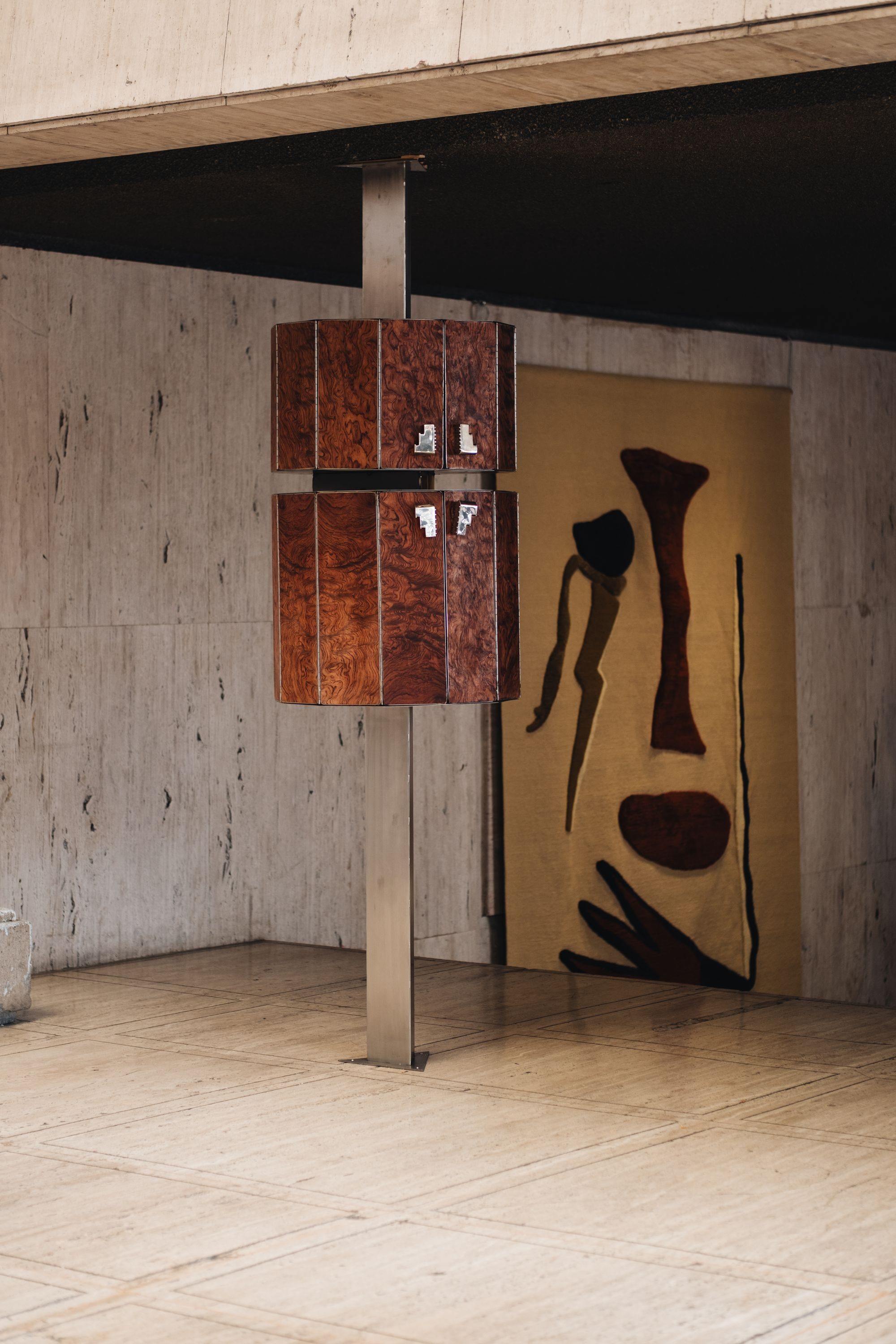
Within this context, cc-tapis presents a selection of rugs from Whispers, the collection developed with Scarlett Rouge, Stroke by Sabine Marcelis—both unveiled in new, exclusive colorations—alongside Monograph by Destroyers/Builders. The rugs are integrated into an immersive spatial setting, where design is experienced as both material presence and emotional landscape. The exhibition also brings together works by UNNO Gallery, featuring designers Alana Burns, Lucía Echavarría, and Andrea Vargas Dieppa, and 6:AM, presenting the 1/1/1 sculpture series, ULTRAS, [QUADRATO], and [EXIT] collections, alongside other pieces by the brand. Inner Stage is completed by a performance directed by artist Mauricio Ascencio. The project explores femininity, craft, and the emotional and material qualities of the spaces we inhabit, blending space, objects, and performers into a fully immersive experience.
Whispers is the collection by Scarlett Rouge inspired by ancient Egyptian mythology and personal introspection, each rug is deeply rooted in the French interdisciplinary artist’s journey of soul-searching and healing. “In this crossroads of my journey, when my broken heart was longing to exist between the infinite unity of the Now and the Eternal, I found solace in the Egyptian Book of the Dead” - Scarlett Rouge reflects. Guided by textile designer Anni Albers’ approach to weaving as an intersection of art, design, and cultural heritage, Scarlett Rouge gives new life to Egyptian motifs and symbols through four designs meticulously handknotted by cc-tapis artisans in Nepal. Going beyond its decorative function, each rug creates sacred spaces, narratives of existence blurring the boundaries between function and fine art. Complementing and mirroring the essence of the rug installation, Scarlett Rouge’s artworks guide viewers through the darkness and into the light. Echoing the work of Swedish painter Hilma af Klint, pioneers of abstract spiritual art, Scarlett Rouge’s compositions seek to transcend the physical world creating portals into her personal realm. Archetypal images, religious iconography, processes of birth, death and resurrection are some of the recurrent themes expressed in her creation evoking the divine, the unseen, and the cyclical nature of existence.
Scarlett Rouge earned a BFA in Photography from The California Institute of the Arts in 2002, later transitioning to painting and completing studio studies in installation art. Rouge’s interdisciplinary practice reflects her nomadic life, blending myth, geography, and cross-cultural influences. A disciple of “art as a spiritual movement,” she uses symbolic language to reconstruct archetypes for a contemporary context, creating therapeutic frameworks that explore the secular soul. Works such as Origine Oscura (2012) address societal neglect and consumerism through mythic figures. Her art fuses storytelling, metaphysics, and performance, drawing inspiration from Jung and Campbell. Rouge explores existential questions and challenges societal boundaries through video works (Magic Trauma Sprinkles, 2009; Beyond the Walls of Eden, 2018), online performances (Sex, God, and Webcams), and movable murals (Oxy- Morans, 2013; Shit Show: The Drumpf Years, 2018). Driven by an intuitive need to reconnect Spirit to Matter, Rouge investigates both material and immaterial forces, using art to navigate darkness and awaken light. Her performance career began at age four with the poppunk band The Visiting Kids, produced by Devo’s Mark Mothersbaugh. She currently performs with LAVASCAR, alongside her mother Michele Lamy and Nico Vascellari.
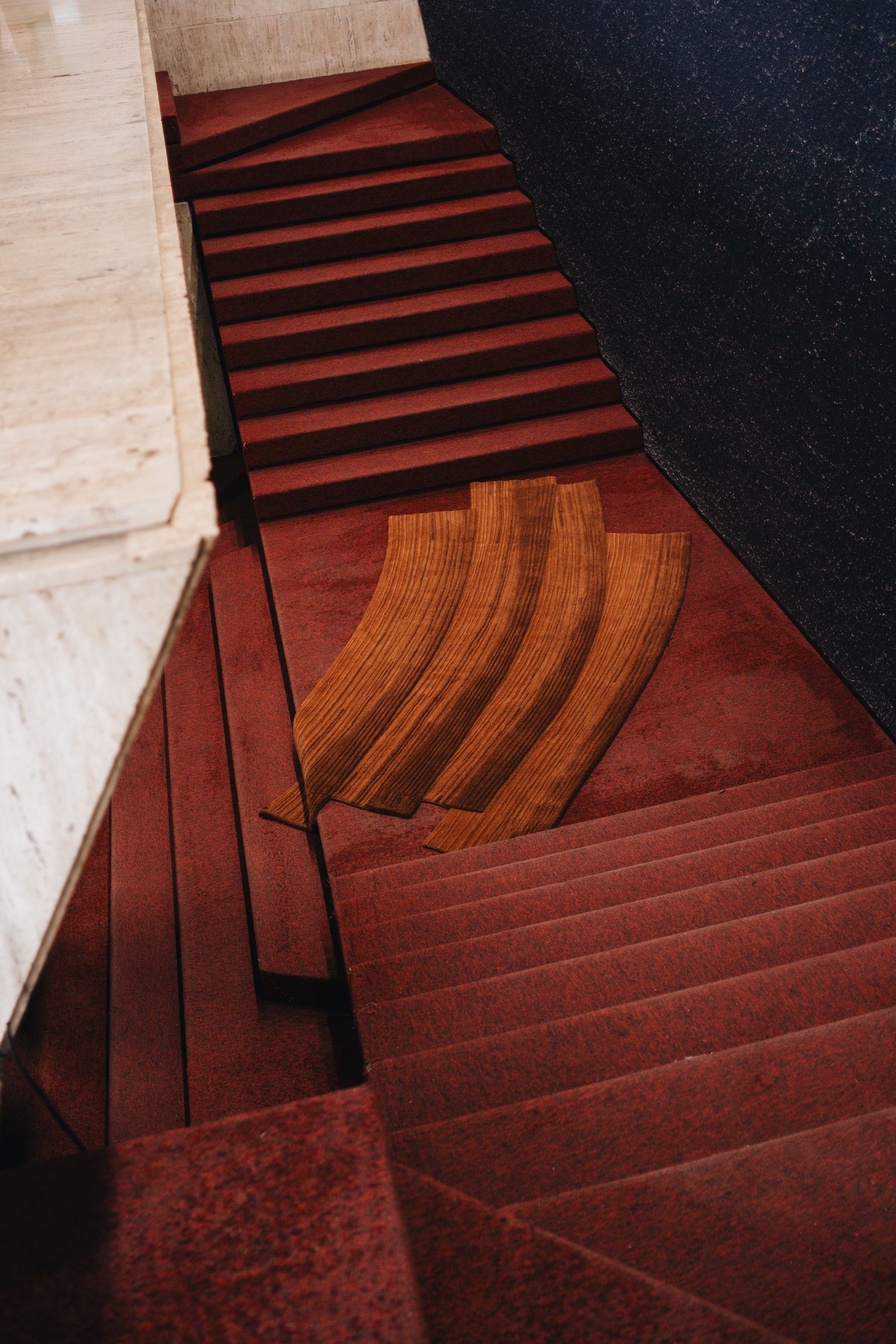
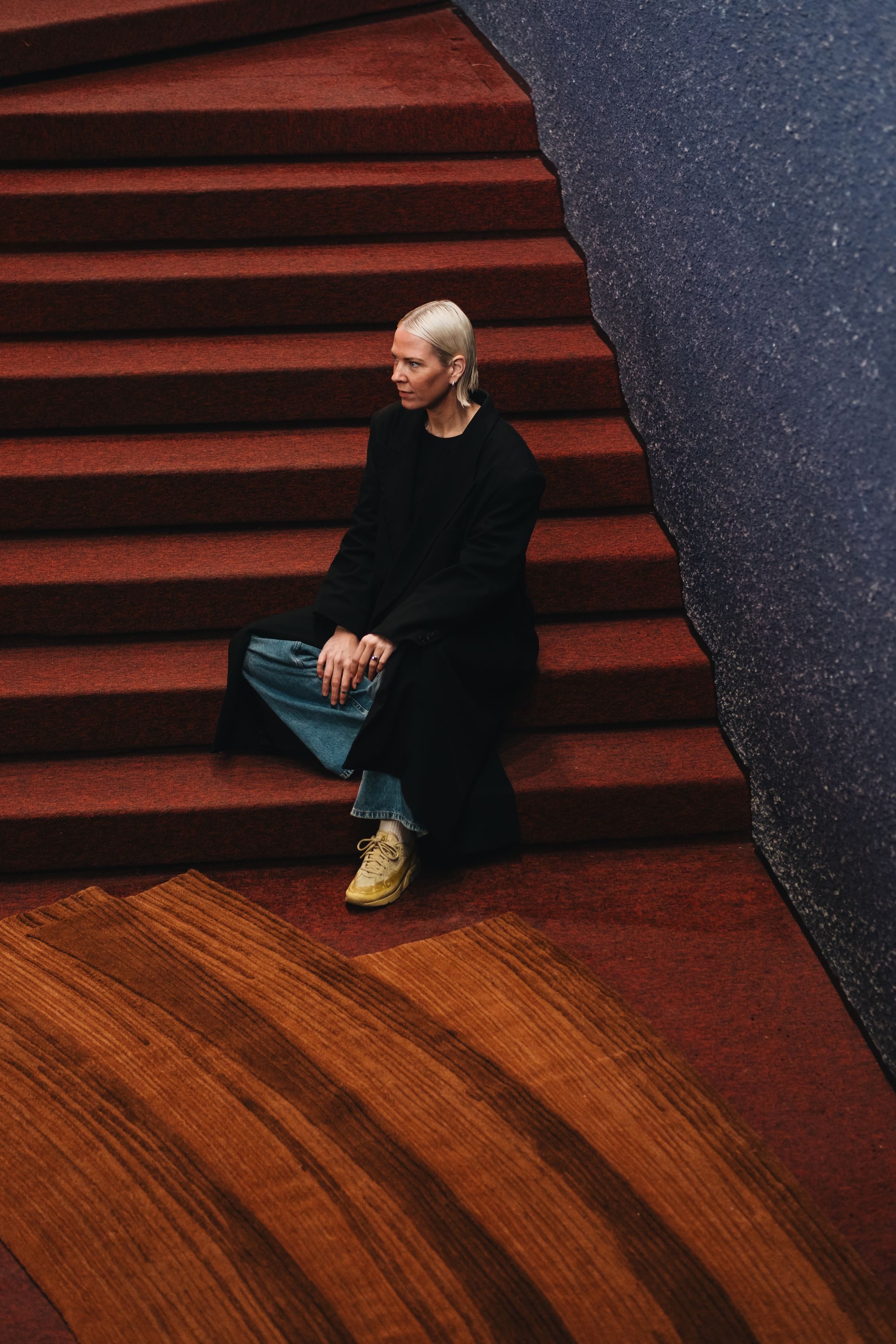
Stroke by Sabine Marcelis explores the rug as a singular, expressive gesture within the domestic space. Conceiving each room as a blank canvas, Marcelis positions the rug as a mark that anchors and defines the composition of an interior. Drawing from everyday domestic actions—strokes, wipes, brushes, and streaks—the collection reflects on how daily gestures leave traces that accumulate meaning over time. Informed by Marcelis’ ongoing research into color, light, and material, the designs translate painterly language into textile form. References to the brushstroke paintings of Roy Lichtenstein and the spontaneous, chromatic fields of Pablo Tomek inform an approach that captures movement and intensity within a controlled, tactile surface. Each rug is characterized by gradual shifts in color saturation and variations in pile height, evoking the three-dimensionality of a painted stroke. Ridges and valleys emerge through carefully calibrated weaving techniques, rendering pressure, direction, and rhythm in dyed wool. The result is a collection that balances immediacy and permanence, where gesture is fixed in material and craftsmanship becomes the medium through which expression is sustained.
Sabine Marcelis is an artist and designer who runs her practice from the harbor of Rotterdam, the Netherlands. After graduating from the Design Academy of Eindhoven in 2011, Marcelis began working within the fields of product, installation and spatial design with a strong focus on materiality. Her work is characterized by pure forms which highlight material properties. Marcelis applies a strong aesthetic point of view to her collaborations with industry specialists. This method of working allows her to intervene in the manufacturing process, using material research and experimentation to achieve new and surprising visual effects for projects both showcased in museums and commissioned by commercial clients and fashion houses. Sabine considers her designs to be true sensorial experiences: the experience becomes the function, with a refined and unique aesthetic. Her work has been acquired into the permanent collection of The MoMa Museum of Modern Art, New York, Museum Boijmans van Beuningen, Stedelijk Museum Amsterdam and The National Gallery of Victoria, Melbourne, AU among others. She has recently won the prestigious Dezeen award ‘Designer of the year 2024’, Elle Deco International Design award ‘Designer of the year 2023’ and Wallpaper Magazine awards ‘Designer of the year 2020’, Notable exhibitions include solo shows at the Mies van der Rohe Barcelona Pavilion, Museum Boijmans van Beuningen, High Museum of Art Atlanta and Vitra Design Museum. Group shows at Stedelijk Museum Amsterdam, Les Musee des Arts Decoratifs, Kunsthal Rotterdam. Art installation commissions by Bulgari, Fendi, Dior, Art d’Egypt and Noor Riyadh festival among others.
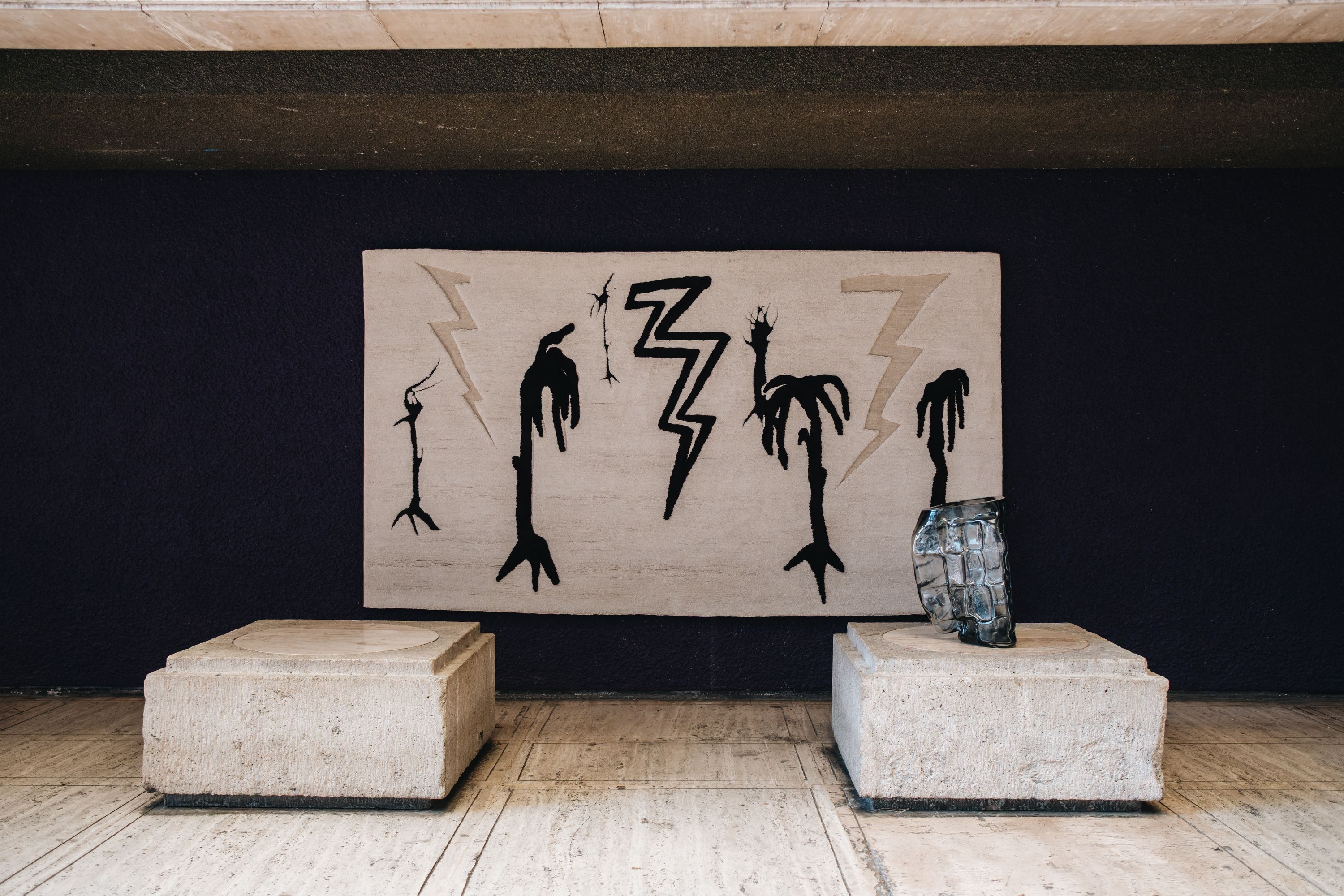
With Monograph, cc-tapis and destroyers/builders bring the studio’s architectural sensibility to the world of rugs, balancing contemporary and traditional elements, rawness and softness, literally applying the hands-on process-driven concept of the designer to artisanal craftsmanship. Focusing on paper collages with adhesive tape, the collection takes inspiration from one of the most primitive and instinctive phases of creation. While Linde Freya Tangelder, founder of destroyers/builders, typically applies her research to metal, wood, or glass, the Monograph collection marks her first exploration into textiles and two-dimensional design, embracing the raw, tactile qualities of jute and wool. Her process of collaging, folding, cutting and taping, were adopted by Indian Artisans who embraced and translated it with out of scale pieces of jute, folding and stitching raw textile together. Just like her sculptural works, these rugs celebrate subtle reliefs, layered textures, and tonal variations, evoking the overlapping transparency of tape on paper by stitching a series of hand-woven rug strips together. The Monograph collection celebrates the rawness and simplicity that define destroyers/builders, transforming an ephemeral moment of material experimentation into an enduring textile piece.
Within the works of Linde Freya Tangelder exist an overarching inspiration found in architectural elements, materials or building techniques. Linde Freya Tangelder, founder of the studio, strives for sensory relevance and cultural value in detail and on a larger scale. The works have a sculptural and architectural character, and balance between contemporary and traditional elements, translated through diverse materials. Linde Freya takes on projects that range from commissions to self-initiated projects, and extend across the realms of both furniture, interior and fashion collaborations. Linde Freya Tangelder founded her studio Destroyers/ Builders in Belgium in 2015, with a distinct signature blending the control of form with raw material experimentation. Linde Freya, born on 6 October 1987, works and lives in Antwerp and Asse, close to Brussels. Her work is internationally exhibited in galleries and several museums. In 2019, she is awarded as Young Designer of the Year (Belgium) and in 2023 as Young Design Talent of the Year Edida International. Combining art and design, sculpture and architecture, Linde Freya Tangelder highlights the materiality and character of each work. By naming her studio Destroyers/Builders, an evocative oxymoron, the Belgian based studio, run by the Dutch artist affirms her fascination for deconstruction, which allows her to imagine her own works. Linde Freya studied at Design Academy Eindhoven (graduated 2014), her internship at Estudio Campana (Sao Paulo) and the Brazilian connection she conveyed from her family background, remains an influence in her work. Linde Freya exalts hand-signed craftsmanship and industrial techniques by combining different materials, sometimes precious, sometimes raw.
casa valner
cc-tapis and sabine marcelis PRESENT ROLL
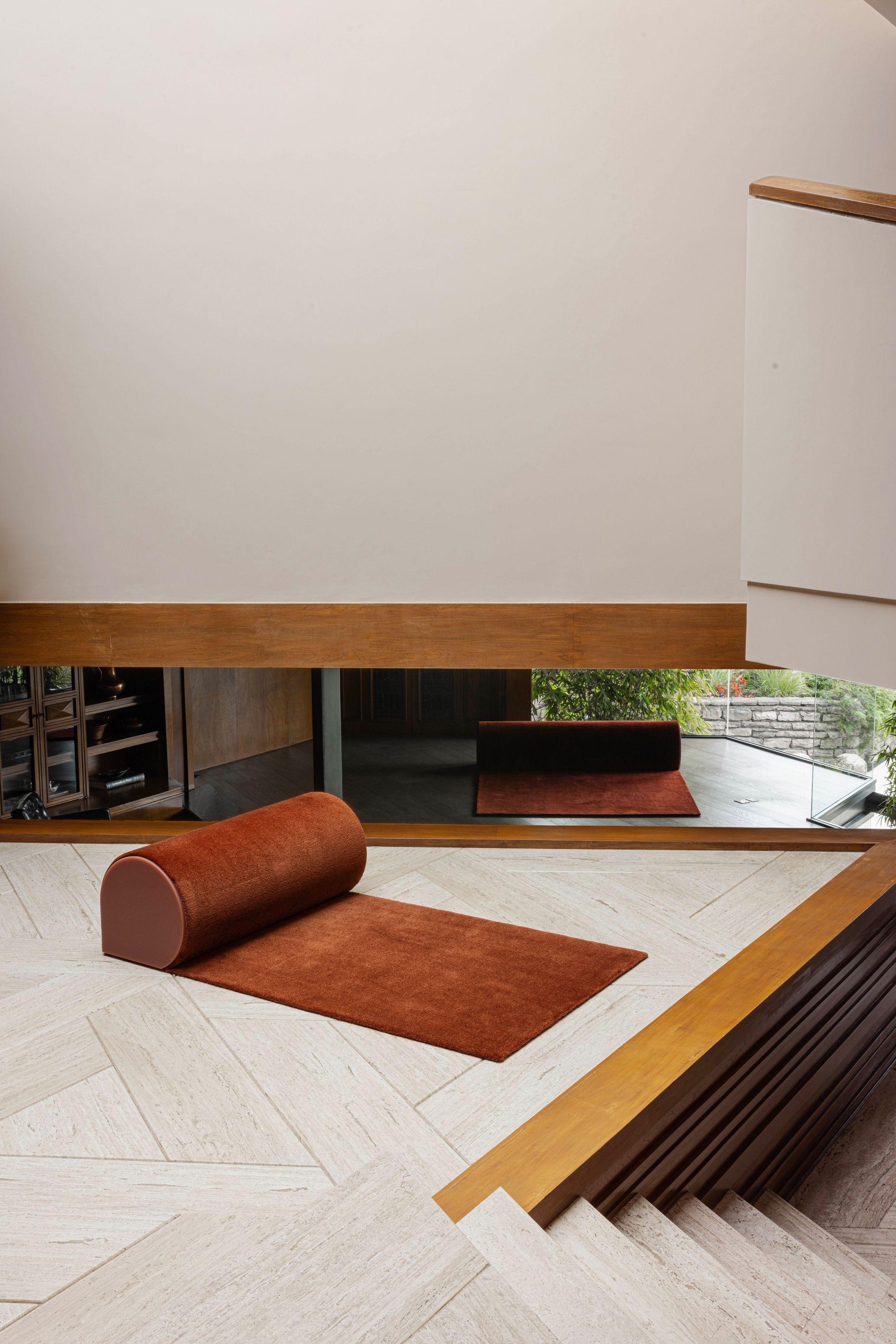
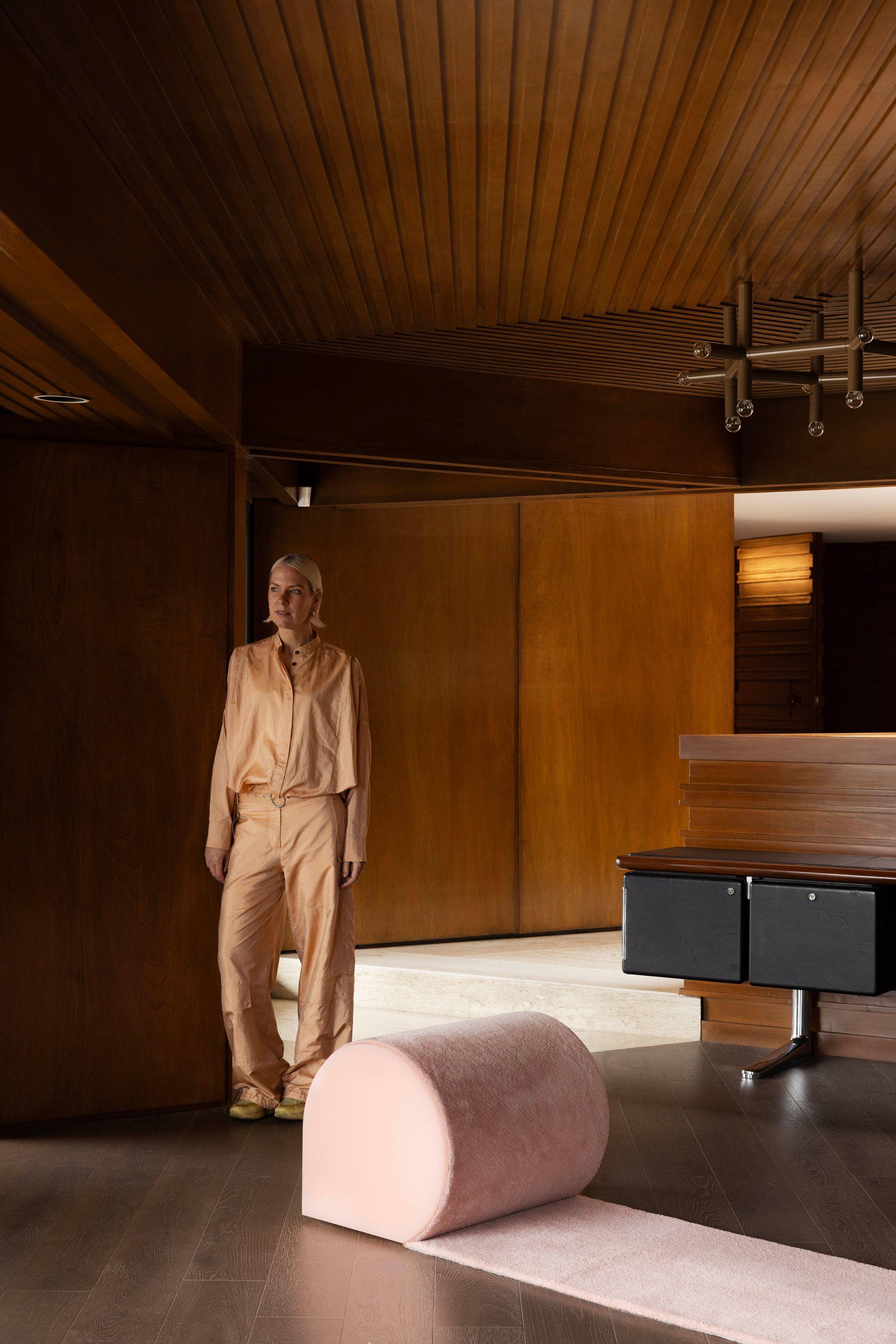
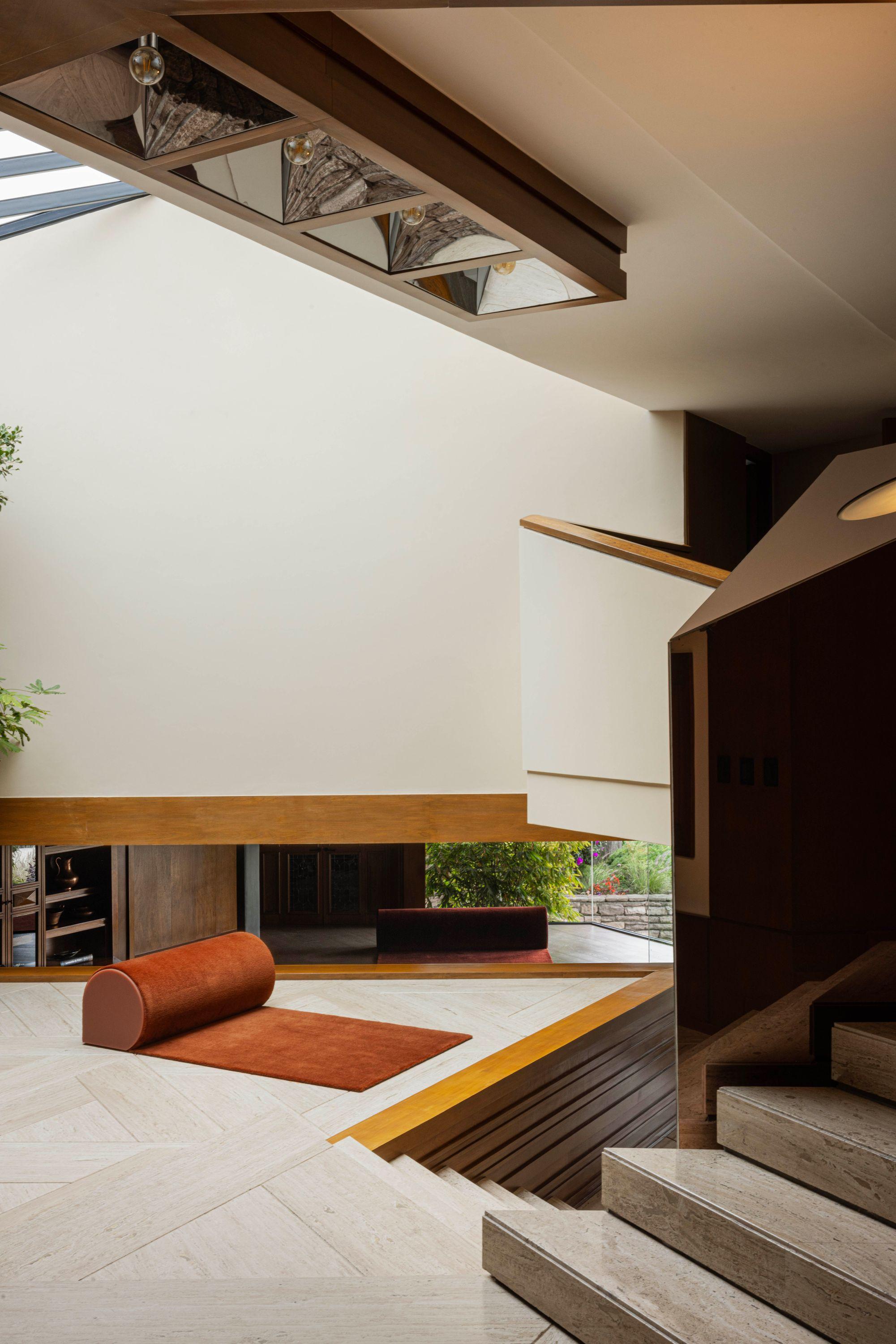
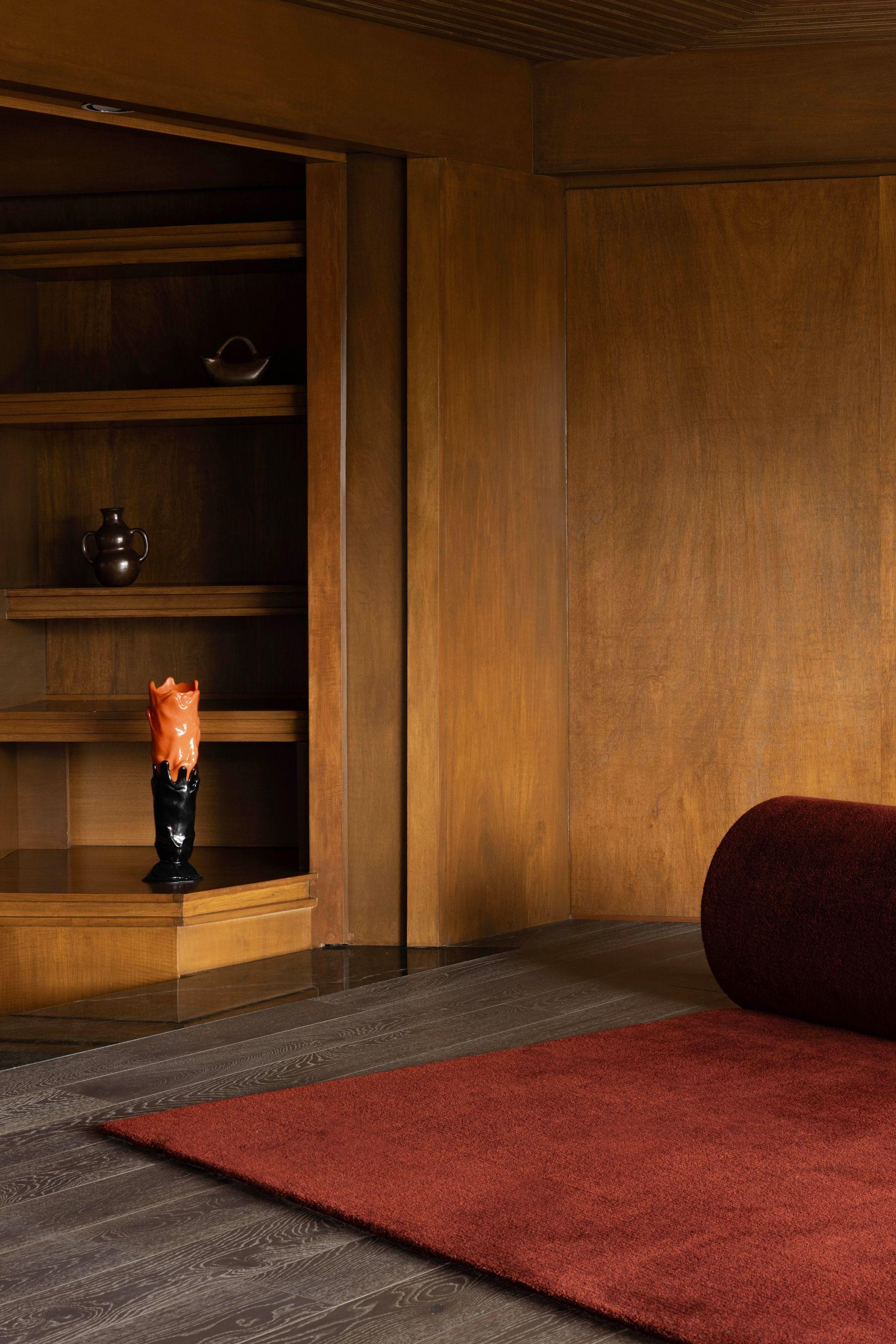
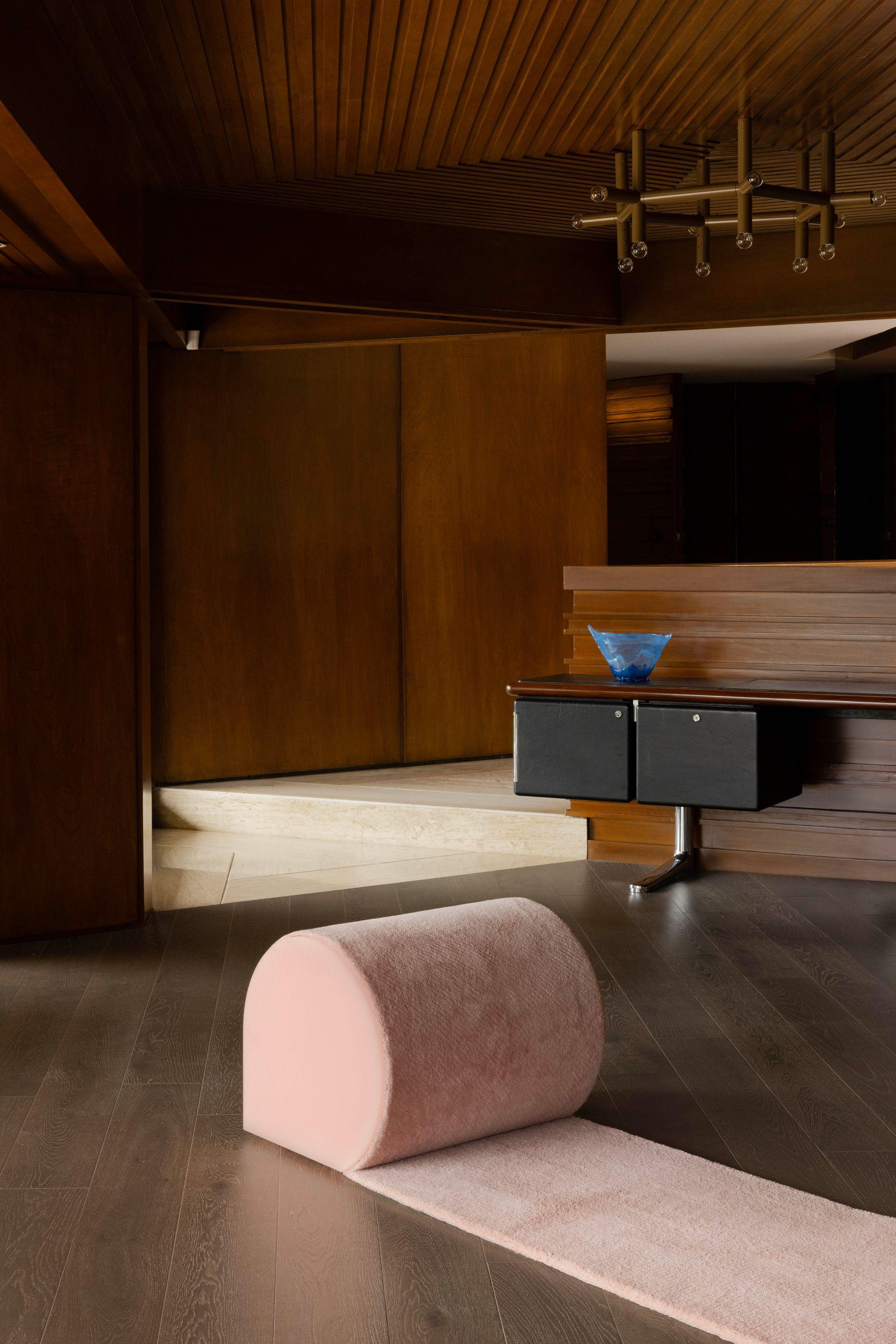
On the occasion of Mexico Art Week 2026, cc-tapis presents Roll, a series of three limited-edition pieces, presented in a site-specific installation within the Valner Residence in Mexico City, a landmark early-1970s residence by architect Agustín Hernández.
The project originates from a simple gesture: the act of unrolling.
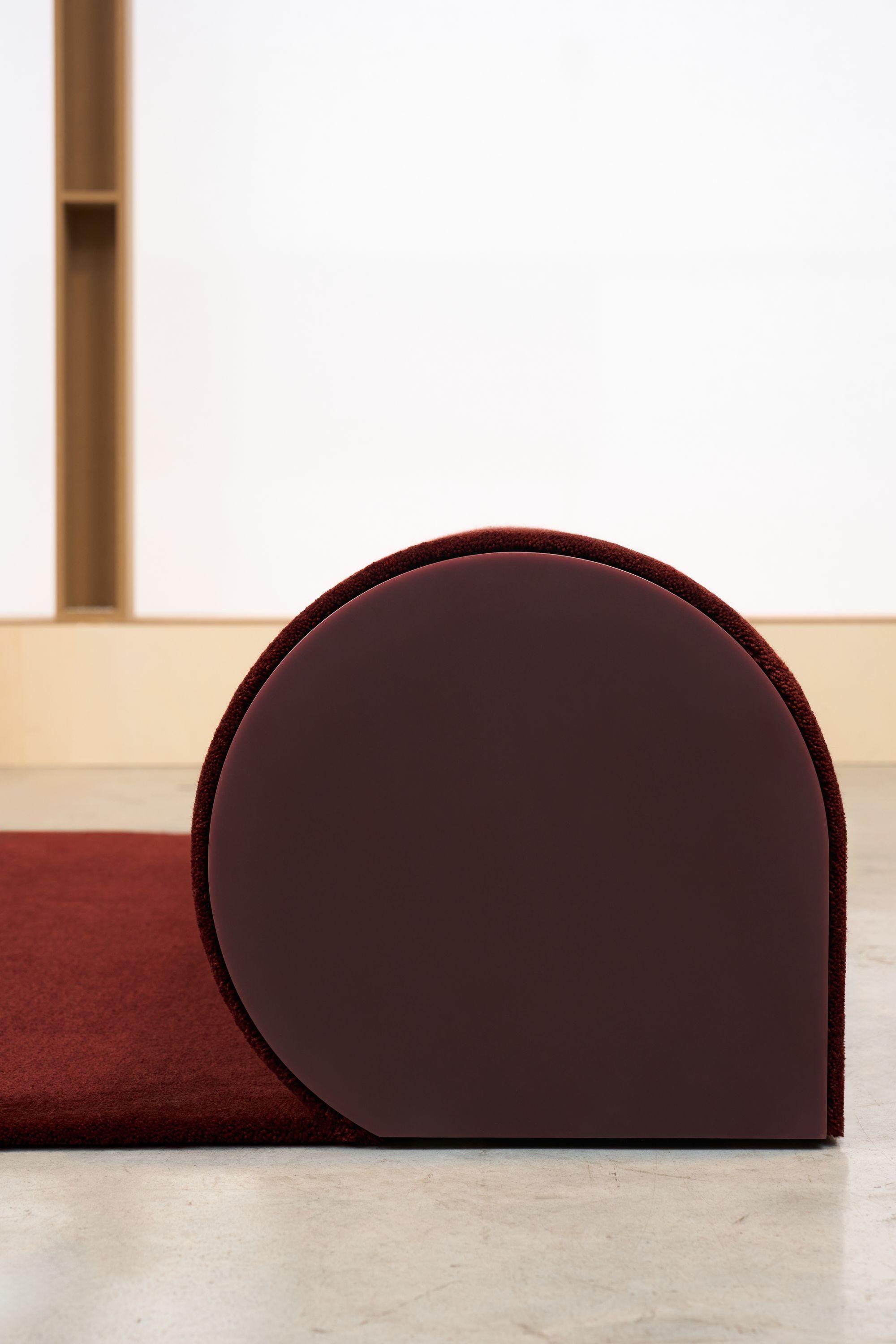
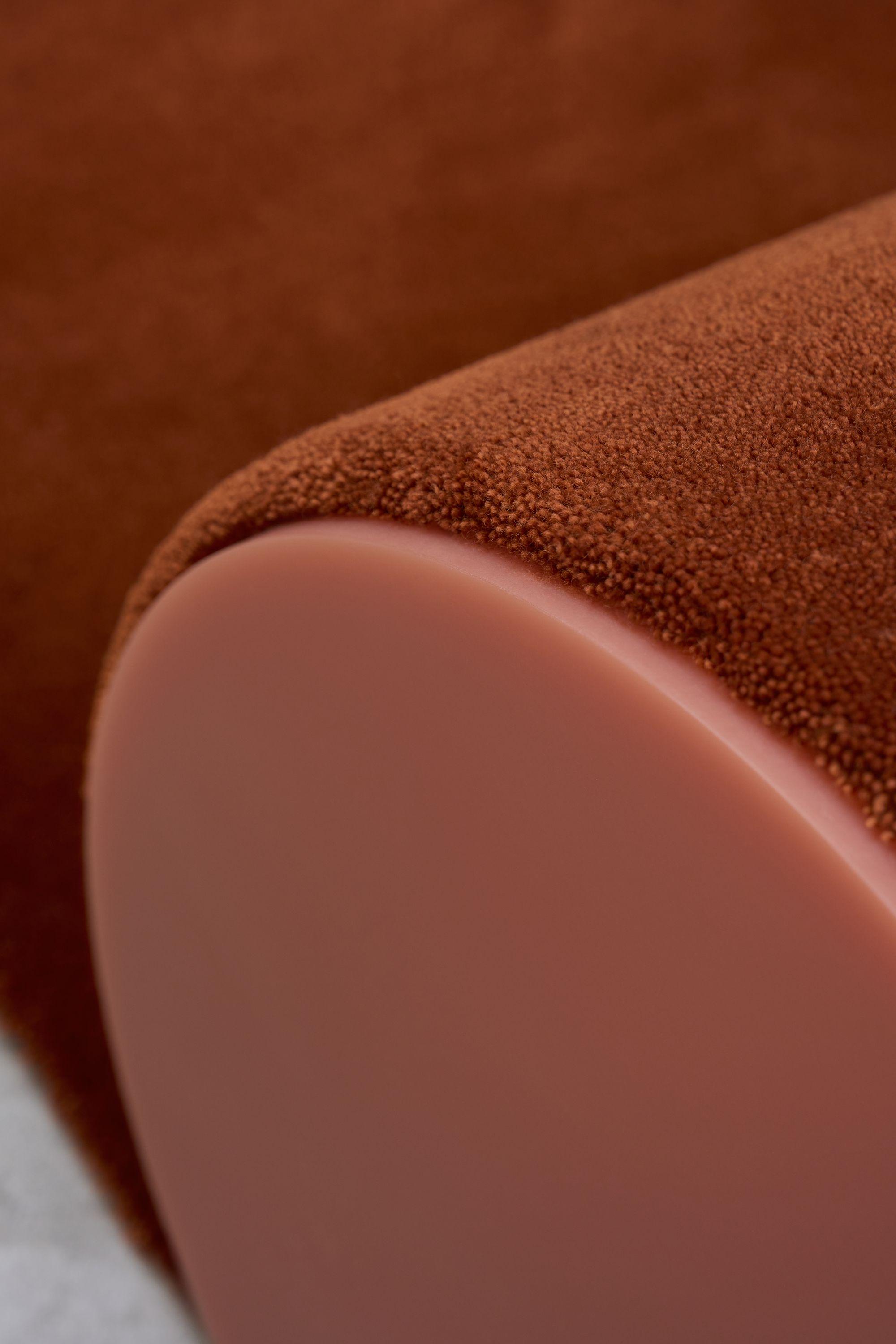
With this work, Sabine Marcelis freezes a moment of transition, crystallizing the instant in which a rug ceases to be a mere surface and begins to become something else. What is usually ephemeral becomes permanent, assuming a sculptural presence. With subtle irony, Roll suspends the rug mid-action, transforming it simultaneously into a rug and a seat. The textile surface becomes a place for the body, while the rolled element assumes the role of a backrest. The work draws on a familiar, everyday gesture typical of living spaces — sitting on the rug and leaning against another element for support — making it explicit and fixing it into a singular form, suspended between use and sculpture.
Material contrast plays a central role in the project. The softnes of wool meets the hardness and translucency of resin, creating a dialogue between opposing sensibilities. Resin, a material central to Sabine Marcelis’s practice, enters here into a relationship with wool of the highest quality, balancing tactile warmth with sculptural presence. Though radically different in nature, the two materials are unified through a monochromatic palette, sharing the same color and constructing a sense of visual continuity. With Roll, cc-tapis continues its experimentation in rug-making, extending material research while also questioning the object’s function. Developed through Made in Milan, the brand’s in-house prototyping hub, the piece is realized using robotufting — a process that enables precision and formal freedom, allowing complex shapes and varied tufting directions beyond the limits of traditional techniques.
Sabine Marcelis is an artist and designer who runs her practice from the harbor of Rotterdam, the Netherlands. After graduating from the Design Academy of Eindhoven in 2011, Marcelis began working within the fields of product, installation and spatial design with a strong focus on materiality. Her work is characterized by pure forms which highlight material properties.
Marcelis applies a strong aesthetic point of view to her collaborations with industry specialists. This method of working allows her to intervene in the manufacturing process, using material research and experimentation to achieve new and surprising visual effects for projects both showcased in museums and commissioned by commercial clients and fashion houses. Sabine considers her designs to be true sensorial experiences: the experience becomes the function, with a refined and unique aesthetic. Her work has been acquired into the permanent collection of The MoMa Museum of Modern Art, New York, Museum Boijmans van Beuningen, Stedelijk Museum Amsterdam and The National Gallery of Victoria, Melbourne, AU among others.
She has recently won the prestigious Dezeen award 'Designer of the year 2024', Elle Deco International Design award 'Designer of the year 2023' and Wallpaper Magazine awards ‘Designer of the year 2020’,
Notable exhibitions include solo shows at the Mies van der Rohe Barcelona Pavilion, Museum Boijmans van Beuningen, High Museum of Art Atlanta and Vitra Design Museum. Group shows at Stedelijk Museum Amsterdam, Les Musee des Arts Decoratifs, Kunsthal Rotterdam. Art installation commissions by Bulgari, Fendi, Dior, Art d'Egypt and Noor Riyadh festival among others.
cc-tapis showroom
cc-tapis showroom
piazza santo stefano, 10
20122 - Milano, IT
cc-tapis HQ
cc-tapis Headquarters
via gaudenzio fantoli 15/5
20138 - Milano, IT